From orphaned calves to smart technology: HIP advances ‘Save Ali Pancha’
Hambantota International Port (HIP), in partnership with the Department of Wildlife Conservation (DWC) and the Wildlife and Nature Protection Society of Sri Lanka (WNPS) as project facilitator, is taking its flagship human-elephant conflict initiative to the next stage with the launch of Phase II of the “Save Ali Pancha” project. The programme follows measurable successes in wildlife conservation, scientific research and community engagement achieved during its first phase.
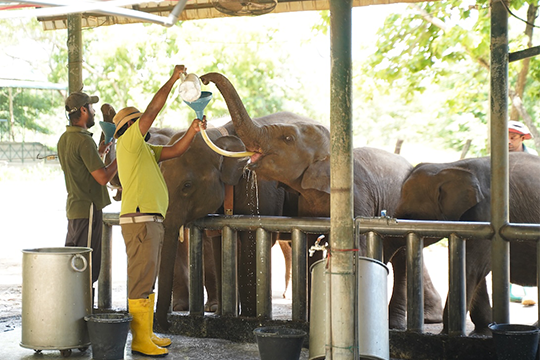
Funded by the China Merchants Foundation (CMF), the new phase will strengthen support for orphaned elephant rehabilitation at the Elephant Transit Home (ETH) in Udawalawa through the introduction of specialised elephant infant milk formula sourced from Australia. The programme will directly support 25 orphaned elephant calves, particularly those between 8 and 10 months of age, who require nutrition closely aligned with their mother’s milk during a critical stage of development.
Jeevan Premasara, Senior General Manager – Human Resources & Administration of HIP, said, “The launch of Phase II marks the continuation of a collaborative conservation programme that has evolved beyond traditional wildlife support. Through the partnership between HIP, the Department of Wildlife Conservation and WNPS, the initiative brings together conservation expertise, scientific research and innovative technology to address one of Sri Lanka’s most pressing environmental challenges.”
Phase I of “Save Ali Pancha,” implemented from October 2022 to October 2023 in partnership with the Department of Wildlife Conservation and facilitated by WNPS, delivered significant outcomes during a particularly challenging period for the country. Amid Sri Lanka’s economic crisis, the initiative helped bridge critical funding gaps at the Elephant Transit Home, ensuring uninterrupted milk supplies for orphaned calves. The intervention supported the survival and recovery of 25 vulnerable elephants, enabling their continued rehabilitation and eventual reintegration into the wild.
The project also expanded into scientific research and innovative conflict-mitigation strategies. Through the partnership between HIP, the Department of Wildlife Conservation and WNPS, “Save Ali Pancha” supported a study involving 404 elephant samples to examine antimicrobial resistance among Sri Lanka’s elephant populations. Findings revealed low levels of antibiotic resistance, reinforcing confidence in existing treatment approaches. The research was subsequently presented at the International One Health Conference in China.
Technology-led interventions formed another important pillar of the programme. Trials involving vibration-triggered elephant collars, activated through mobile devices, showed promise as a non-invasive approach to steering elephants away from human settlements and reducing conflict zones.
At the community level, the initiative engaged more than 200 farmers in Hambantota, supporting groundwork for a Managed Elephant Reserve while encouraging more sustainable land-use practices. Awareness and educational programmes conducted among schools and farming communities also sought to reshape perceptions around coexistence and long-term conflict reduction.
Practical solutions were also introduced in high-risk areas such as Bandagiriya through the installation of Light Repel Systems (LRS), which use blinking LED technology to discourage elephants from entering agricultural and residential areas, helping reduce crop damage and improve safety for local communities.
Building on these outcomes, Phase II will continue its dual focus on wildlife protection and community wellbeing while expanding support for elephant rehabilitation, conservation research and education initiatives in areas affected by human-elephant conflict.
The programme operates under HIP’s Human-Elephant Peace Fund, established in 2021 as part of the port’s Environmental, Social and Governance (ESG) strategy. The initiative is implemented in partnership with the Department of Wildlife Conservation, with WNPS serving as the facilitating organisation and technical conservation partner.
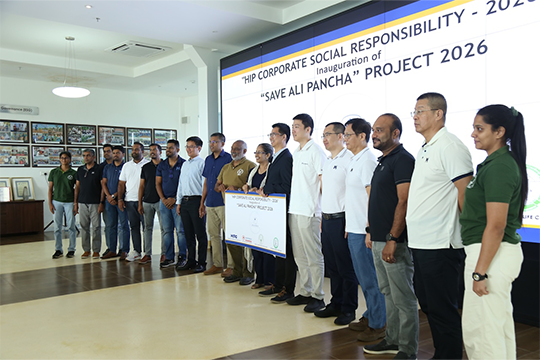
The inauguration of “Save Ali Pancha” Phase II was held at the HMC Sky Lounge with the participation of representatives from the Department of Wildlife Conservation, WNPS, HIP’s Executive Committee (EXCO), Operational Committee (OPCO) and staff members.
Through “Save Ali Pancha,” HIP continues to advance practical, science-based and community-centred solutions aimed at fostering long-term coexistence between people and elephants while contributing to wildlife conservation in Sri Lanka.